
Many people’s first exposure to Japanese daily life comes via anime. Characters wander through bright festival streets. They carry treats in one hand and enjoy games with the other. This happens long before people book their trips or learn some Japanese phrases. It should come as no surprise that discussions regarding Japanese culture frequently coexist with internet entertainment, whether one is perusing sites like Azurslot login or reading reviews of anime.
Many tourists are taken aback by how realistic these scenes seem.
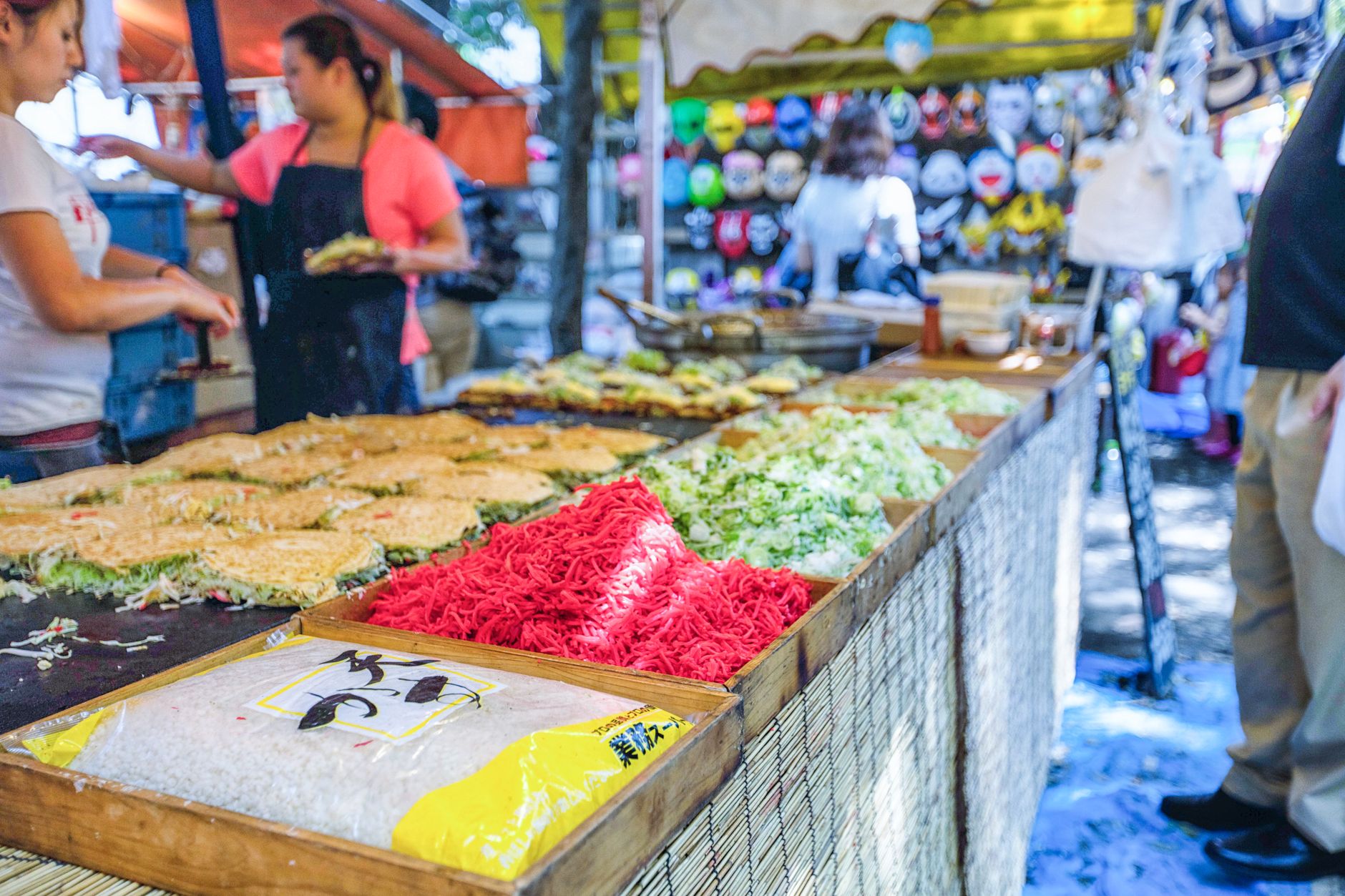
There is much more to Japanese summer festivities, or matsuri, than meets the eye. You can usually smell a food stall long before you see it. The streets are filled with the aroma of fried appetizers, sweet desserts, and grilled noodles. Music plays, conversations flow, and lanterns glow overhead. This is one of the reasons anime’s festival scenes are so unforgettable. Animated renditions of these events frequently do a fairly good job of capturing the ambiance, even though they can be a touch more polished than reality.
Food has a significant impact on that emotion. A scene can be brought to life with a single shot of steam rising from a hot grill or a figure halting abruptly because they smell something delectable. Even though these are little elements, many people identify Japanese festivals with actual experiences. Anime frequently depicts the thrill of finding food while meandering through a busy street rather than just the food itself.
In anime, takoyaki is arguably the most iconic festival dish. Octopus fills these golden balls of batter, which are then covered in mayonnaise, sauce, seaweed, and flapping bonito flakes. Anime characters frequently take a meal too quickly, which is a common mistake made by first-time guests. The center can be heated enough to make anyone regret their impatience for a little moment, even though the outside may appear innocuous.
Yakisoba is equally common. It is not the most elegant dish that can be found in Japan; it is served from big grills and put on plain trays. However, it is precisely why it belongs at festivals. It is inexpensive, filling, and convenient to eat while navigating a throng. Yakisoba often appears in anime as comfort food, not fine dining. This is probably the most accurate way to show it.
Anime also accurately captures the fact that festival cuisine is rarely the primary draw. Eating is not the only reason people go to matsuri. The experience is interwoven with the cuisine. Families spend the evening visiting vendors, couples purchase sweets before locating a spot to view fireworks, and friends exchange snacks while perusing stalls. The dinner itself is frequently forgotten, but the people who shared it are still remembered.
Naturally, anime frequently portrays festivals in an idealized manner. Real events can be intense, packed, and surprisingly draining. Long lines form at popular stalls, making it difficult to find a peaceful spot to sit. However, these flaws add to the allure. Comfort is not the goal of a summer event. It’s supposed to be vibrant.
Fans continue to love festival episodes for a reason. These are typically the times when things temporarily slow down. Characters take a break from their daily schedules, get together with friends, enjoy fireworks, and spend the evening meandering among food vendors. Though it is rarely the primary focus, the cuisine does matter. The sensation of being there is what people recall.
Anime frequently succeeds in this regard. It has nothing to do with shaved ice, yakisoba, or takoyaki. It is about consuming those items while strolling down a busy, lantern-lit street while background music plays. Even those who have never visited Japan can identify with that emotion. It is simple to see why so many people add a genuine Japanese summer festival to their vacation bucket list after a successful festival scene.
